
IT engineering · Security · Infrastructure
Systems built to be defended, not just delivered.
White hat designs, builds and operates the software and infrastructure organisations rely on every day. Our engineering practice combines application development, secure architecture, cloud platforms and network operations under a single accountable team.
Discipline
Security-first engineering
Scope
Software, cloud, network, operations
Model
Long-term technical ownership
The company
An engineering company, organised around responsibility.
White hat operates as a technical partner rather than a supplier of isolated tasks. We take responsibility for how a system behaves in production: how it fails, how it recovers, how it is monitored, how access is controlled and how it will be maintained years after the first release.
Our work spans the full technical surface of a modern organisation — the applications people use, the platforms those applications run on, the networks that connect them and the operational practices that keep everything measurable and secure.
The company name reflects our position. A white hat works with the same knowledge as an attacker, applied openly and for the benefit of the organisation being protected. That principle shapes how we design systems, document decisions and communicate risk.
Core IT capabilities
Six practices that operate together. Most engagements draw on more than one, because real technical problems rarely respect internal service boundaries.
- 01
Application engineering
Custom software, web platforms, internal tooling and integrations designed for maintainability over the full lifetime of the system.
- 02
Security engineering
Threat modelling, hardening, access design, vulnerability management and secure delivery pipelines embedded in day-to-day work.
- 03
Cloud architecture
Landing zones, workload design, cost governance and migration paths for public, private and hybrid environments.
- 04
Network infrastructure
Segmented, observable networks with documented topology, resilient routing and controlled remote access.
- 05
Data engineering
Reliable pipelines, storage design, retention rules and reporting foundations that keep data usable and governed.
- 06
Managed operations
Monitoring, patching, incident response and continuous improvement for systems already in production.

Software development
Software written for the people who will maintain it.
We build backend services, web applications, internal platforms and integration layers. Delivery is incremental, reviewed and tested, with architecture documented as it evolves rather than reconstructed afterwards.
- Backend services
- APIs, domain logic, job processing and integration layers.
- Web applications
- Accessible, responsive interfaces with predictable state.
- Modernisation
- Incremental replacement of unsupported components.
- Engineering practice
- Code review, automated tests, traceable releases.

Cybersecurity
Security treated as an engineering property, not a document.
Controls only matter if they survive contact with production. We design protection into architecture, deployment and daily operations, then verify that the controls actually behave as intended under change.
Threat modelling
Attack paths mapped against real data flows and trust boundaries.
Identity & access
Least-privilege roles, strong authentication, reviewed permissions.
Hardening
Baseline configuration, patch discipline, dependency and secret control.
Detection
Meaningful logging, alerting and rehearsed incident response.
Cloud infrastructure
Platforms that stay predictable as they grow.
Cloud environments degrade quietly when they are assembled without structure. We define account boundaries, network design, identity, deployment automation and cost visibility first, so growth does not turn into sprawl.
- Landing zone and account structure design
- Infrastructure as code with reviewed change history
- Workload placement across public, private and hybrid estates
- Backup, recovery and failover planning that is tested
- Cost attribution and capacity review
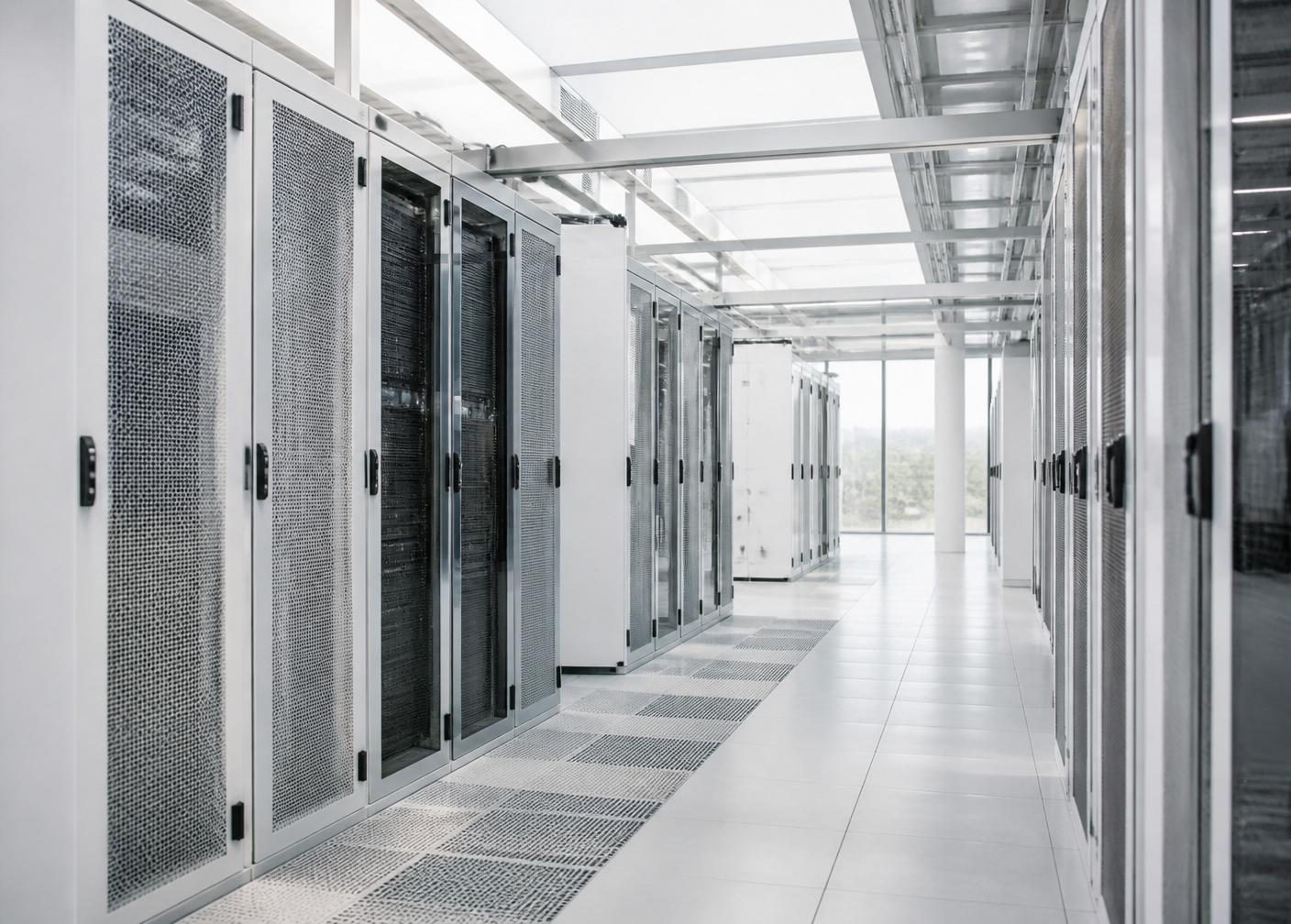

Network engineering
Infrastructure that is documented, segmented and observable.
A network that nobody can describe cannot be defended. We map existing topology, rebuild segmentation around actual traffic requirements and leave behind diagrams and configuration that match reality.
- Topology
- Documented, versioned and reviewed after every change.
- Segmentation
- Traffic separated by function, sensitivity and exposure.
- Remote access
- Controlled, authenticated and logged connectivity.
- Resilience
- Redundant paths and tested failover procedures.
Digital transformation
Change delivered in increments the business can absorb.
Transformation fails when it is attempted as a single event. We sequence change so each step produces something usable: a replaced integration, a retired manual process, a migrated workload, a reporting layer that finally reflects operations.
Phase 1
Assess
Current systems, dependencies, constraints and risk are documented.
Phase 2
Sequence
Work is ordered by business value and technical dependency.
Phase 3
Deliver
Each increment is released, verified and operationally supported.
Phase 4
Embed
Practices, documentation and ownership stay with the organisation.

IT consulting
Advice grounded in systems we would have to operate ourselves.
Our consulting work is produced by engineers who build and run infrastructure. Reviews end with concrete findings, trade-offs stated plainly, and a prioritised plan that can be executed by an internal team or with our involvement.
Architecture review
Structural assessment of an existing platform, its failure modes and its cost of change.
Security posture review
Practical evaluation of exposure, access control, monitoring and recovery readiness.
Technology selection
Comparison of viable options against skills, budget, lifespan and operational load.
Managed IT services
Operations that continue after the project ends.
Monitoring and alerting
Signals tied to service behaviour
Alerts describe user-visible impact, not raw resource noise, so response is proportionate.
Patch and lifecycle management
Planned, tracked, reversible
Operating systems, runtimes and dependencies are kept current under a documented schedule.
Backup and recovery
Verified restore procedures
Backups are exercised, not assumed, with recovery targets agreed in advance.
Incident response
Defined roles and escalation
Incidents follow a rehearsed process and close with a written review and follow-up actions.
Technical support
Direct access to engineers
Issues are handled by people who know the environment rather than a scripted queue.
Technology stack
Chosen for support, not novelty.
We work across mainstream, well-documented technologies. Selection depends on the problem, the existing environment and who will maintain the result.
Languages & runtimes
- TypeScript
- JavaScript
- Python
- Go
- Java
- C#
- PHP
- Bash
Application layer
- React
- Node.js
- REST
- GraphQL
- gRPC
- Message queues
Data
- PostgreSQL
- MySQL
- Redis
- Object storage
- ETL pipelines
- Warehousing
Platform & operations
- Linux
- Docker
- Kubernetes
- Terraform
- CI/CD
- Observability tooling
Security
- IAM
- Secret management
- TLS/PKI
- SIEM integration
- Vulnerability scanning
How we work
Discovery
We examine the environment, the constraints and the actual problem before proposing anything.
Design
Architecture, security model, data flows and operational requirements are defined and written down.
Build
Work proceeds in reviewed increments with automated testing and traceable releases.
Verify
Functionality, performance, recovery and security controls are validated against the design.
Operate
Systems are monitored, maintained and improved with clear ownership.
Review
Regular technical reviews keep architecture, cost and risk aligned with the business.
Industries we serve
Regulatory pressure, uptime expectations and data sensitivity differ by sector. Our approach adapts to those constraints rather than applying one template.
Financial services
Strict auditability, access control and change traceability.
Healthcare technology
Sensitive data handling, retention discipline and availability.
Manufacturing & logistics
Integration between operational systems and business software.
Professional services
Internal platforms, automation and secure collaboration.
Software companies
Platform engineering, scalability and delivery automation.
Public-interest organisations
Transparency, accessibility and sustainable maintenance.
Quality and security principles
Rules we apply to our own work.
- 01
Least privilege by default
Every account, service and integration receives only the access it demonstrably needs.
- 02
No undocumented systems
If a component exists in production, its purpose, owner and configuration are written down.
- 03
Failure is designed for
Recovery paths, degraded modes and rollback procedures are defined before release.
- 04
Changes are reviewable
Infrastructure and code changes pass through review with an auditable history.
- 05
Honest risk reporting
Known weaknesses are communicated clearly, including when the fix is not immediate.
Company values
Integrity
We describe systems as they are. Estimates, risks and limitations are stated without decoration.
Craft
Technical quality is a long-term cost decision, not a matter of taste.
Stewardship
We build systems other people will inherit, and we build them accordingly.
Clarity
Documentation, diagrams and written decisions are part of the deliverable.
Restraint
The simplest structure that satisfies the requirement is preferred over the most impressive one.
Continuity
Knowledge stays with the client, not locked inside a single supplier.
Why organisations work with White hat
One accountable team across software, security and infrastructure.
Fewer handovers
Application, platform and network work is coordinated inside one team, so responsibility does not disappear between suppliers.
Security is built in
Protection is designed with the system rather than added under pressure after an audit.
Documentation that survives
Environments are described accurately, so future teams are not forced to rediscover them.
Realistic sequencing
Work is planned around dependencies and operational capacity, not around an idealised timeline.
Long-term maintainability
Technology choices account for who maintains the system and for how long.
Direct technical communication
Clients speak with the engineers doing the work.
Frequently asked questions
- What kind of organisations does White hat work with?
- We work with organisations that depend on software and infrastructure to operate: product companies, service providers, industrial operators and public-interest institutions. Engagements range from a single architectural review to long-running platform ownership.
- Do you work on existing systems or only new builds?
- Both. A large share of our work involves inherited systems: documenting undocumented environments, stabilising fragile deployments, replacing unsupported components and gradually modernising the parts that hold a business back.
- How do engagements usually start?
- They start with a discovery phase. We review the current architecture, delivery process, security posture and operational constraints, then present findings with a prioritised sequence of work. Nothing is built before the problem is understood.
- How is security handled during delivery?
- Security is part of design rather than a final review step. Threat modelling, least-privilege access, dependency control, secrets management, encryption and audit logging are defined alongside functional requirements.
- Which technologies do you commit to?
- We favour well-supported, widely understood technologies with predictable long-term maintenance characteristics. Technology selection follows the operating context, existing team skills and the lifespan the system is expected to have.
- How do you communicate during a project?
- Written summaries, documented decisions and a regular delivery rhythm. Clients receive an accurate view of progress, open risks and dependencies rather than status reports that hide problems until they surface.
White hat builds, secures and operates the technology organisations depend on.
Software engineering, cybersecurity, cloud architecture, network infrastructure, data solutions and managed operations, delivered by one team with a single standard of technical responsibility.
- Company
- White hat
- Website
- whitehatnetwork.com
- mulderruben50@gmail.com